Siding Damage: How to Decide Between a Repair and a Replacement
What You’ll Learn
How do I know if I need to repair or completely replace my home’s siding?
It depends on the scale of the damage and your siding’s age.
Targeted repairs are the smart choice for minor, isolated problems on younger siding.
But when damage is widespread, you’re constantly fixing new issues, or the siding is past its expected lifespan, a full replacement is the necessary long-term investment to protect your home from Pennsylvania weather.
In This Blog:
You notice the first hairline crack in a corner panel after a freeze.
You wave it off as a problem for later.
But by fall, that crack has spread. The panel is barely hanging on.
Now you’re stuck: is this a simple repair, or the start of a major replacement?
Choose Repair for These 3 Scenarios
Repair is the smart, cost-saving move when the damage is limited and controlled.
It saves you from the larger investment of a full replacement and protects your siding’s remaining lifespan.
1. The Damage is Minor and Isolated
Think a few cracked boards from hail, a small hole, or a localized stain. The problem is cosmetic and contained to one area.
2. Your Siding is Still Young
If installation was within the last 5-10 years, a repair is logical. Your siding is made of quality materials that have decades of life left in them.
3. The Overall System is Sound
The rest of the siding is firm, intact, and shows no buckling or moisture signs.
Whatever the issue is, it is not catastrophic.
Helpful Material-Specific Repair Notes:
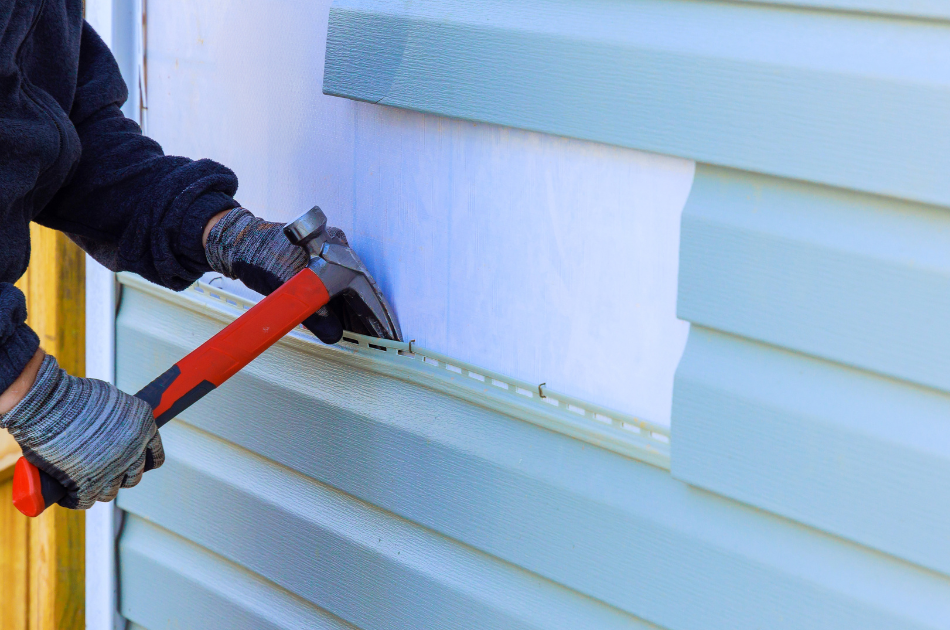
- For Vinyl: Individual panels can be snapped out and replaced.
- For Fiber Cement: Damaged boards can be swapped individually.
- For Wood: Rotted sections can be cut out and patched.
What a Professional Repair Saves You
A proper repair can help your siding last beyond its estimated lifespan.
You avoid the larger cost of a full replacement while fixing the immediate issue.
Importantly, a professional repair is often required to maintain the manufacturer’s warranty on your siding materials. DIY fixes can void this protection.
This is why it is important to catch these problems early, so that cost-effective repairs can happen before water gets behind the siding and starts to rot your home’s frame.
5 Signs You Need a Full Replacement
Sometimes, repairs are only band-aids over a broken bone.
That’s when replacement becomes the only way to restore protection and stop the cycle of constant fixes.
1. Damage is Widespread
Issues appear on multiple sides of your home. This means that the siding material is beginning to fail, and patching one spot is just a temporary fix.
2. You’re Stuck in a Repair Cycle
New cracks, leaks, or soft spots keep appearing with every seasonal change.
3. There’s Hidden or Structural Damage
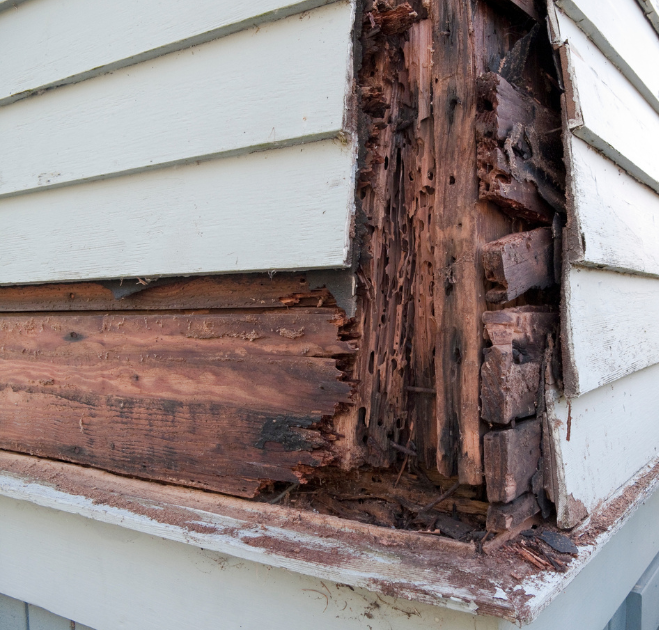
Moisture, mold, or rot within your walls means that the siding is actively failing and is putting the rest of your home’s structure at risk.
4. Your Siding has Reached its Lifespan
All materials wear out. Compare your siding’s age to its expected service life with our blog Siding That Lasts: Balancing Cost, Durability, and Value. If you’re within the last few years of your siding’s lifespan, replacement is the lasting solution.
5. You Want a True Upgrade
Modern materials offer better insulation for lower energy bills, dramatic curb appeal, and a strong return on investment if you sell.
Know Your Material’s Breaking Point
Different siding types fail in different ways. Knowing this helps you spot the point of no return.
- Vinyl becomes brittle with age. It cracks in cold weather and can warp or melt under intense, reflected heat.
- Wood rots. It’s a constant battle against moisture and insects. Once rot spreads behind the surface, replacement is the only cure.
- Fiber Cement shatters with impact damage. It is durable but not invincible, and if water gets behind it consistently, it can wick moisture.
How Pennsylvania Weather Demands Replacement
Our climate is too unstable for siding to stand much of a chance.
- Humidity and rain promote relentless mold and wood rot. Siding that’s slightly compromised in our summer humidity will only get worse.
- Freeze-thaw cycles are brutal. This is probably siding’s worst weather enemy. Water seeps into tiny cracks, freezes and expands, then thaws. This cycle, repeated all winter, pries materials apart from the inside out.
This damage also impacts your wallet. Your energy bills could be higher due to ineffective insulation. Gaps and cracks in siding let your heated or cooled air escape, which makes your HVAC work harder.
Secure Your Home’s Future
Knowledge is power, but a professional inspection gives you the final answer.
Let us give you a clear, upfront estimate. We offer financing options to make the right choice work for your budget.
Contact GP Martini Roofing for your free, no-obligation siding estimate now.
FAQs
How do I know if my siding damage is minor or widespread?
Minor damage is isolated, like a few cracked boards in one area.
Widespread damage appears on multiple sides of your home and includes persistent water stains or mold growth.
Can you repair all siding types?
Most common types can be repaired. Vinyl panels can be snapped out. Fiber cement boards can be swapped. Wood can be patched.
The repair must happen before water gets behind the siding and rots your home’s frame.
Why is Pennsylvania weather so hard on siding?
Our humidity promotes mold and rot.
Repeated freeze-thaw cycles force water into cracks, where it freezes and expands, then thaws, prying materials apart from the inside out all winter.
Does damaged siding make my heating and cooling less efficient?
Yes. When siding has gaps, your warm or cool air leaks outside.
Your HVAC system must constantly run to replace that lost air, which uses more energy and raises your bills.