Why Your Door is Sticking and How to Fix It
![Blog Images [GPM] (1)](https://eadn-wc03-9721172.nxedge.io/wp-content/uploads/Blog-Images-GPM-1-7-1024x538.png "Blog Images [GPM] (1)")
What You’ll Learn
Why did my exterior door start sticking, and does it mean it needs to be replaced?
Most sticking doors don’t need full replacement. In many cases, the issue comes from humidity, loose hinges, seasonal house movement, or years of paint buildup.
Pennsylvania’s changing weather can cause doors and frames to expand, shift, and rub, which homeowners notice more during humid summers and wet seasons.
In This Blog:
One humid summer afternoon, the front door suddenly started dragging against the frame.
Not enough to stop it from closing completely, but enough to notice. Enough to push a little harder every time Karen went inside.
Over a few weeks, the sticking got worse. The edge scraped the frame. The latch stopped lining up cleanly. And now every time the door opened, it made the same frustrating sound.
Most homeowners assume a sticking door means the door itself is failing.
Usually, it doesn’t.
In many cases, the problem comes from small shifts caused by moisture, loose hardware, or seasonal movement, and the fix is often simpler than people expect.
Why Doors Start to Stick Over Time
Doors fit within very small tolerances. Even slight movement in the door, hinges, or frame can cause rubbing and sticking.
In Pennsylvania, seasonal humidity plays a major role. Wood naturally absorbs moisture from the air, causing both doors and frames to expand during humid weather and contract during drier seasons.
Over time, normal wear and settling can also shift how a door hangs and closes.

The Most Common Causes of a Door Sticking
1. Humidity and Moisture (Most Common Cause)
Humidity is the biggest reason doors suddenly begin sticking, especially during summer.
Wood doors absorb moisture from humid air, which can cause them to swell slightly. Even a small amount of expansion can make the edge of the door rub against the frame.
This is particularly common:
- During humid Pennsylvania summers
- After heavy rain periods
- For entry doors that are exposed to weather
If the sticking seems worse at certain times of year, moisture is often the culprit.
2. Loose Hinges
Loose hinges allow the door to sag slightly over time.
When this happens, the latch side of the door can drift downward and begin rubbing against the frame or threshold. Sometimes homeowners mistake this for a warped door when the real issue is simply loose hardware.
3. House Settling
Homes naturally shift over time.
Minor settling can slightly change the shape or alignment of door openings, especially in older homes. Even subtle structural movement can affect how smoothly a door opens and closes.
If multiple doors in the home suddenly begin sticking, settling may be contributing to the issue.
4. Paint Buildup or Sticky Surfaces
Repeated layers of paint can gradually reduce the clearance between the door and frame.
In some cases, paint also becomes tacky in humid conditions, causing doors to stick even when alignment is otherwise fine.
This is especially common on older wood doors that have been repainted multiple times over the years.
DIY Door Sticking Fixes Homeowners Can Try
Many sticking doors can be improved with simple adjustments that homeowners can safely handle themselves.
Tighten the Hinges
Start by checking all hinge screws. Loose screws are one of the easiest and most common fixes.
If screws spin without tightening properly, the wood behind them may no longer hold securely.
Use a Longer Screw
Replacing one of the hinge screws with a longer screw helps anchor the hinge deeper into the framing behind the door jamb.
This can pull a sagging door back into alignment surprisingly well.
Shim the Hinges
Adding a thin shim behind one hinge can subtly adjust how the door hangs within the frame.
Small alignment changes often make a significant difference in how the door closes.
Lubricate the Edges and Hardware
Sometimes, friction is simply caused by dry contact points.
Applying lubricant to hinges and lightly reducing friction along sticking areas may temporarily improve operation.
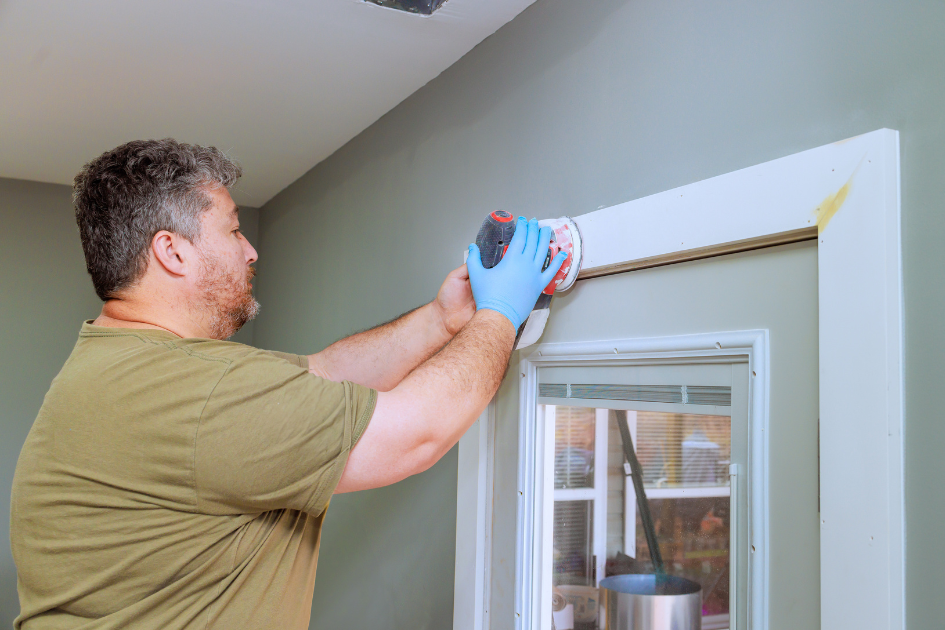
Sand or Plane the Edge
If humidity has caused the door to swell slightly, carefully sanding or planing the rubbing edge can create enough clearance for smoother operation.
This should be done gradually. Removing too much material can create gaps once the humidity drops again.
Sand or Plane the Edge
If humidity has caused the door to swell slightly, carefully sanding or planing the rubbing edge can create enough clearance for smoother operation.
This should be done gradually. Removing too much material can create gaps once the humidity drops again.
When Door Sticking Means the Door May Be the Problem
Most sticking doors are repairable.
However, if a door has:
- Always stuck
- Never latched correctly
- Always rubbed the frame
- Been difficult to close since installation
…it may simply be improperly sized or installed incorrectly from the beginning.
In those situations, repeated adjustments may only provide temporary improvement. Replacement is often the better long-term solution.
When to Call a Professional
You should consider professional help if:
- The door sticks year-round
- The frame appears warped
- Multiple doors are suddenly affected
- DIY adjustments aren’t solving the issue
- Moisture damage is visible around the frame
A professional can determine whether the problem is cosmetic, structural, or related to the door’s original installation.
Don’t Let a Sticky Door Turn Into a Bigger Problem
A sticking door is often a minor issue, but ignoring it can lead to worsening alignment problems, damaged hardware, or moisture-related deterioration over time.
If it is time to replace your door, we’re here to help. Contact GP Martini Roofing for a free door estimate.
FAQs
Why does my door stick more during the summer?
Humidity causes wood doors and frames to absorb moisture and expand slightly. This reduces clearance and creates rubbing against the frame.
Can loose hinges really make a door stick?
Yes. Loose hinges allow the door to sag out of alignment, causing it to rub against the jamb or threshold.
Should I sand a sticking door immediately?
Not always. If humidity is the temporary cause, aggressive sanding can create excessive gaps once the weather dries out. Small adjustments are usually best.
How do I know if my door needs replacement?
If the door has always fit poorly, never latched correctly, or continues to stick despite adjustments, it may be improperly sized or installed and is better suited for replacement.