Types of Metal Roofs and Their Pros and Cons
What You’ll Learn
How can I pick a type of metal roof that lasts and looks great on my Chester County home?
Learning material differences, panel types, and climate suitability can help you pick the best roof for your home.
The right combination of materials and design ensures durability, and efficiency.
In This Blog:
Your asphalt roof is faded and worn.
You need a new roof, and you don’t want to replace it in 20 years.
So you’re switching to a metal roof.
But what material is best for your home? Aluminum? Steel?
What panel type?
There are a few options to choose from, so let’s break it down.
Types of Metal Roof Materials
Aluminum
Aluminum, a lightweight and corrosion-resistant metal, is an excellent choice for residential roofing. Its corrosion resistance makes it suitable for coastal areas or regions with high humidity.
While lightweight, aluminum is softer than steel, making it more susceptible to denting in severe weather conditions. Despite being more expensive up front, aluminum roofs can have a long lifespan.
- Expense Level: Medium
- Ideal Climate: any temperature, any humidity level, light to moderate storms
- Lifespan in Ideal Climate: 50+ years
Steel
Steel, a robust and versatile metal, is widely used in various construction applications, including roofing. Known for its strength and durability, steel provides excellent protection against harsh weather conditions.
Despite being more budget-friendly than aluminum, untreated steel is prone to corrosion, which can be mitigated with galvanization or coatings. However, steel is heavier than aluminum, potentially requiring additional structural support during installation.
- Expense Level: Low
- Ideal Climate: any temperature, low (ungalvanized) to high humidity (galvanized), light to severe storms
- Lifespan in Ideal Climate: 30 to 50 years
Copper
Copper, a premium metal choice, is known for its distinctive appearance and longevity. Copper roofs develop a unique patina over time, giving a timeless and elegant look.
While copper is one of the most expensive roofing materials, its roofs can last well over 100 years with minimal maintenance.
Working with copper requires specialized skills, potentially leading to higher installation costs.
- Expense Level: High
- Ideal Climate: moderate temperatures, low to moderate humidity, light to moderate storms, low air pollution
- Lifespan in Ideal Climate: 70 to 100+ years
Zinc
Zinc is emerging as a compelling choice for roofing materials, characterized by its unique set of attributes.
Over time, zinc roofs develop a protective layer that grants them a self-healing ability, effectively addressing minor scratches and imperfections. Beyond durability, zinc offers a distinctive aesthetic appeal, initially presenting a shiny surface that gradually transforms into a matte gray patina, adding character to the structure.
However, it’s important to note that the premium qualities of zinc come with an elevated upfront cost, making it a choice that aligns with those who prioritize long-term benefits.
Working with zinc requires specialized skills during installation, contributing to overall project costs.
- Expense Level: High
- Ideal Climate: any temperature, low to moderate humidity, light to moderate storms, low air pollution
- Lifespan in Ideal Climate: 50 to 100+ years
Types of Metal Roof Panels
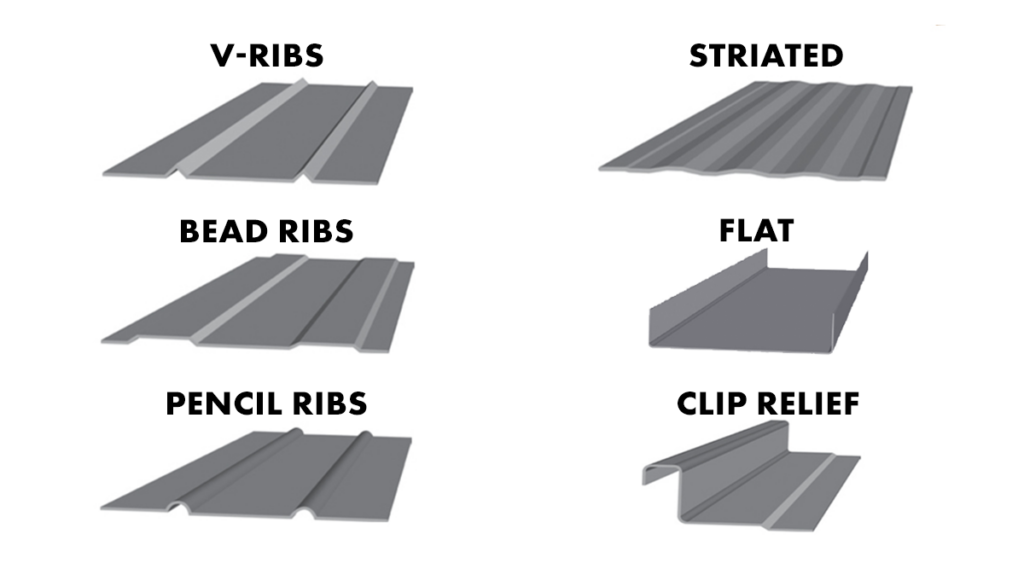
V-Ribs
V-rib panels, with their V-shaped profile, are a popular choice for both residential and commercial applications. The V-shape enhances water shedding, reducing the risk of leaks.
V-rib panels offer a classic and versatile appearance, though they may show waviness, known as oil canning, depending on factors like metal thickness and installation.
Bead Ribs
Bead rib panels feature raised beads, providing a distinctive look while offering practical benefits. The raised beads add strength and rigidity to the panels, creating visual interest and texture on the roof.
However, installation may be more complex due to the raised beads.
Pencil Ribs
Pencil rib panels have smaller, closely spaced ribs, creating a subtle and refined appearance. Pencil ribs contribute to a modern and sleek aesthetic and can enhance wind resistance, preventing uplift.
The small spaces between ribs can trap debris, requiring periodic cleaning.
Striated
Striated panels feature horizontal lines, offering a clean and contemporary look. Striated panels contribute to a modern and streamlined appearance, with some options coming with concealed fasteners for improved aesthetics.
However, concealed fasteners require more time and skill during installation.
Flat
Flat panels provide a clean and simple aesthetic, suitable for modern and minimalist designs. Flat panels contribute to a sleek and uncluttered roof design and are generally easier to install compared to ribbed options.
However, flat panels have less efficient water shedding compared to ribbed alternatives.
Clip Relief
Clip relief panels have raised sections at the edges, creating a visually interesting profile. Clip relief adds visual interest and depth to the roof, potentially allowing for increased airflow beneath the panels.
However, clip relief panels are more expensive than simpler options.
Choosing the Right Metal Roof for Your Chester County Home
When you’re ready to transition to a metal roof for your home, you need to consider…
- Climate: Consider your local climate and choose a metal that can withstand weather conditions. In Chester County, where the weather is sporadic and unpredictable, you need a metal that will protect your home in any situation.
- Budget: Determine your budget for both material and installation costs.
- Aesthetics: Choose a metal and panel style that complements the architectural style of your home.
- Longevity: Consider the lifespan of the material and its maintenance requirements.
Installation & Maintenance
Metal roofs require professional installation, so hiring experienced contractors is essential.
A good contractor will also offer regular inspections and cleaning services to identify and address any issues before they become a bigger problem for your new roof.
Talk to Your Chester County Roofer
Investing in a metal roof is a significant decision that involves understanding the characteristics of different materials and panel styles.
Talk to your local roofing contractor to see what materials and styles are best for your area.
Request an estimate from us at GP Martini Roofing and get moving toward your metal roof today.
FAQs
What are the different styles of metal roofs?
Metal roofs come in various styles to suit different preferences and architectural designs. Some popular styles include V-ribs, bead ribs, pencil ribs, striated, flat, and clip relief. Each style offers unique aesthetics and functional benefits, allowing homeowners to choose a design that complements their home’s overall look.
What is the best metal roofing?
Determining the best metal roofing depends on factors such as climate, budget, and aesthetic preferences. Aluminum, steel, copper, and zinc are among the top choices. Aluminum is lightweight and corrosion-resistant, while steel is known for its strength. Copper offers a distinctive look and longevity, and zinc boasts exceptional durability and self-healing properties. The best metal roofing material for you will depend on your specific needs and priorities.
What is the cheapest type of metal roof?
The cost of a metal roof varies based on the material and style chosen. Among the commonly used metals, steel is often more budget-friendly than aluminum and copper. Additionally, flat panels are generally more affordable than ribbed or textured options. It’s essential to consider both material and installation costs when evaluating the overall affordability of a metal roof for your home.
What are the two biggest concerns with a metal roof?
While metal roofs offer numerous benefits, there are two primary concerns to be aware of.
1. Noise: Some homeowners express concerns about increased noise during rainfall on a metal roof. However, proper insulation and underlayment can significantly reduce this noise, providing a comfortable living environment.
2. Expansion and Contraction: Metal expands and contracts with temperature variations, which can potentially lead to issues if not addressed properly during installation. Professional installation and the use of appropriate materials help mitigate the impact of expansion and contraction, ensuring a stable and long-lasting metal roof.
These concerns are manageable with proper planning and installation, and the benefits of a durable, energy-efficient, and aesthetically pleasing metal roof often outweigh these considerations.