Assessing Wind Damage on Your Roof: What to Look For
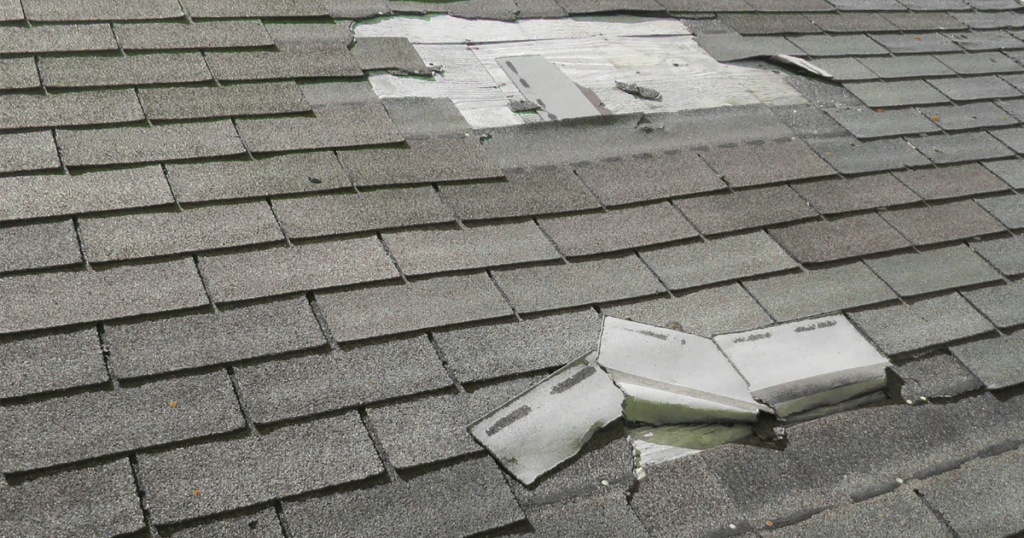
Last night was a tough one.
It sounds like pots and pans clanging outside of your door.
Today, you see some of your shingles scattered in the front yard.
But there could be more wind damage on your roof that you might not see from your yard.
You need to know what steps you should take to mitigate it.
Typically, conventional asphalt shingles have the capacity to endure wind speeds ranging from 60-70 mph, whereas those with higher ratings can withstand winds of 110 mph or greater.
What is in this guide:
- How to assess the damage
- Look for visible signs of wind damage on shingle roofs
- Consult a professional
- Tips on repairing wind-damaged shingle roofs
- Preventative measures and maintenance tips
- Common concerns you might have
How to assess the damage
Note: If you aren’t comfortable attempting the tasks below, call a local roofer that you trust before you damage your roof or hurt yourself.
Before attempting any repairs, thoroughly assess the extent of the damage. This will help you decide whether you can handle the repairs yourself or need professional assistance.
- A pair of binoculars is a great tool for inspecting your roof without climbing it. Look for missing, cracked, or curled shingles and damaged flashing.
- Ensure that the seals and flashing around chimneys, vents, and skylights are intact—these areas are prone to damage from high winds.
- The ridge cap is susceptible to wind damage due to its exposed position. Check for any displacement or damage to the ridge shingles.
Look for visible signs of wind damage on shingle roofs
Most of these can be seen from the ground with a pair of binoculars. You might have to get on your roof or into the attic to check for leaks or damaged flashing.
Whatever you decide, make sure you’re comfortable doing it. If not, don’t hesitate to reach out to a professional.
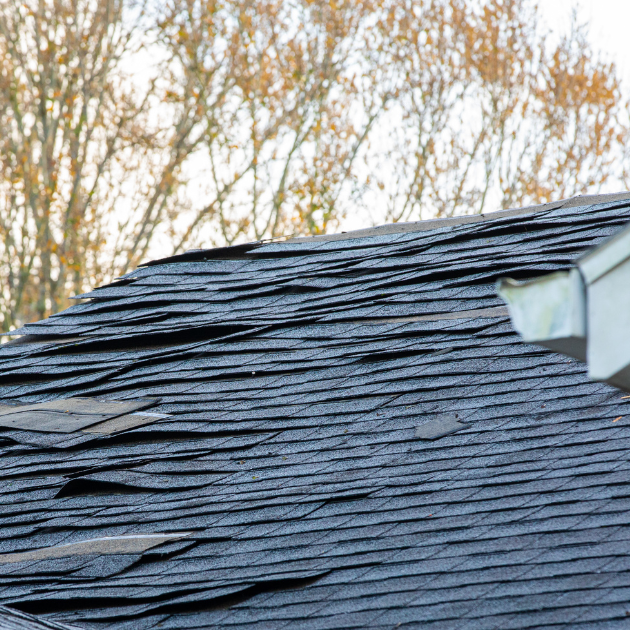
Missing Shingles: One of the most obvious signs of wind damage is missing shingles. High winds lift and remove shingles from your roof, leaving exposed areas.
Curling or Peeling Shingles: Look for shingles that are curling up at the edges or peeling away from the roof. Thisindicates that the wind has compromised the adhesive or fasteners.
Flapping Shingles: In less severe cases, shingles aren’t missing but are loose and flap in the wind.
Granule Loss: Check your gutters and downspouts for excessive granules. Wind causes granule loss, which diminishes the shingles’ ability to protect against the elements.
Cracked Shingles: Wind causes stress on shingles, leading to cracks. These might not be visible from the ground and require a closer look.
Damaged Flashing: Inspect the metal flashing around chimneys, vents, and skylights. High winds loosen or damage these crucial components.
Leaks in Attic or Ceiling: Check your attic or interior ceilings for signs of water ingress. This could indicate that the wind has damaged the underlayment or shingles, allowing water to seep in.
Consult a professional
If the damage is extensive or if you’re unsure about your ability to repair it, it’s wise to consult a professional roofing contractor. They’ll perform a more thorough inspection and carry out necessary repairs or replacements.
- If your roof has sustained significant damage, such as large areas of missing shingles or exposed decking, it’s time to call in the professionals.
- If you notice sagging or structural deformation in your roof, a professional assessment is essential. This could indicate underlying damage to the roof trusses or decking.
Tips on repairing wind-damaged shingle roofs
Note: While some roof repairs can be done as DIY projects, it’s important to be cautious. If you’re not confident in your abilities or lack the proper tools and safety equipment, it’s wise to contact a professional roofer. Attempting repairs without the necessary skills or equipment can lead to further damage to your roof or personal injury. Safety should always be your top priority when dealing with home repairs, especially on a roof.
Temporary Fixes: If you spot minor damage, such as a few lifted or missing shingles, you might be able to perform temporary repairs using roofing cement or nails to hold down the lifted shingles.
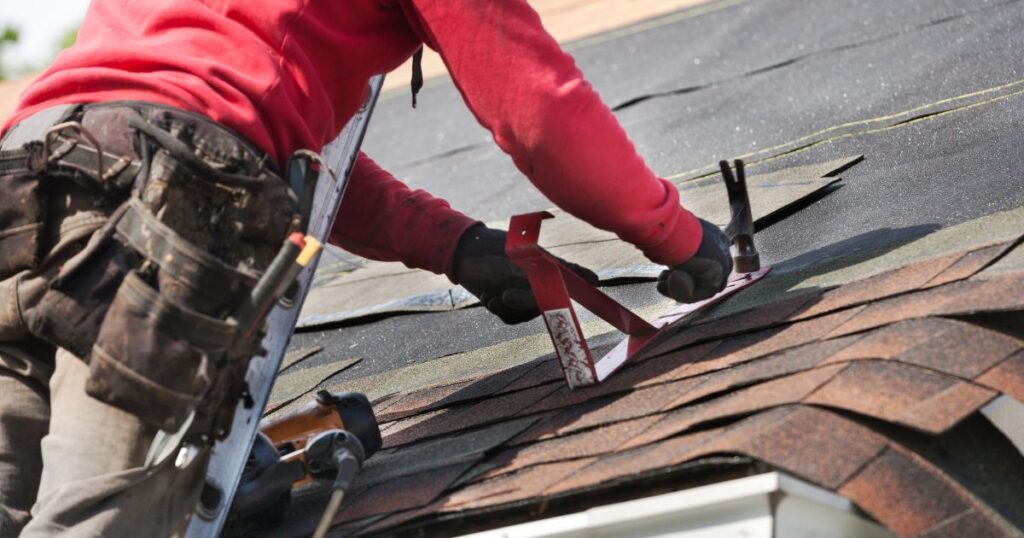
Replacing Shingles: For missing or severely damaged shingles, you’ll need to replace them. Carefully remove the damaged shingle, lift the edges of the surrounding shingles, and slide the new shingle into place.
Ensure Proper Sealing: After replacing shingles, make sure they are properly sealed. This might involve applying a bit of roofing cement under the shingles to secure them against future wind uplift.
Check for Hidden Damage: Sometimes, wind damage isn’t just about the shingles. Inspect the roof deck and underlayment for any signs of water damage or rot.
Preventative measures and maintenance tips
Regular Roof Inspections
Conduct bi-annual inspections, especially after severe weather events, to catch and repair minor issues before they escalate.
Trimming Trees Near the Roof
Overhanging branches scrape and damage shingles during windy conditions. Keep trees trimmed to prevent such damage.
Common concerns you might have
Cost of Repairs
Repair costs vary widely based on the extent of the damage and the type of shingles used. Minor repairs might be inexpensive, while extensive damage might require a significant investment.
Insurance Claims Process
If you’re filing an insurance claim, document the damage with photographs and detailed notes. An adjuster will typically inspect the roof to assess the claim.
Selecting the Right Contractor
Choose a licensed and insured roofing contractor with good reviews and a track record of quality work. Get multiple quotes to ensure a fair price.
Call GP Martini Roofing If Your Roof Has Been Damaged by Wind
Whether you need an inspection or a repair, GP Martini Roofing has you covered.
We continuously strive to be prompt and thorough to better serve our customers, so if your roof has been damaged by the wind don’t hesitate to give us a call or request an estimate.

FAQs
Can you repair wind-damaged shingles?
Yes, wind-damaged shingles can often be repaired, especially if the damage is minor, like lifted or slightly curled shingles.
However, in cases of extensive damage, such as numerous missing or broken shingles, a full roof replacement might be necessary.
Does homeowners insurance cover wind damage to shingles?
Most homeowners insurance policies do cover wind damage to roofs, including damaged shingles.
However, coverage can vary based on your specific policy and the cause of the damage, so it’s essential to review your policy or consult your insurance provider.
How much wind can a shingle roof withstand?
The wind resistance of a shingle roof depends on the type of shingles used, the quality of installation, and the age of the roof.
Generally, standard asphalt shingles can withstand wind speeds up to 60-70 mph, while higher-rated shingles can resist winds of 110 mph or more.
How do I know if I have damaged shingles?
You can identify damaged shingles by looking for signs like missing, lifting, curling, or cracked shingles.
Additionally, check for granule loss, damaged flashing, and any water leaks in your attic or ceiling, which could indicate hidden damage.