
Solar Roofing vs. Traditional Roofing: What Homeowners Should Know
What You’ll Learn
What’s the difference between traditional roofing, solar panels, and solar roofing systems?
Traditional roofing protects your home but does not generate electricity, while solar panels mounted on an existing roof produce energy.
Solar roofing integrates energy-generating technology directly into roofing materials, combining weather protection and power generation into a single streamlined system.
In This Blog:
Your twenty-eight-year-old asphalt roof is begging for a replacement.
One neighbor swears by just a good traditional roof.
Another claims that his solar panels have paid for themselves three times over in the past few years.
You’ve got a choice to make: go the traditional route with a classic roof, make the extra investment and get solar panels, or get the best of both worlds with a solar roofing system.
What Is a Solar Roofing System?
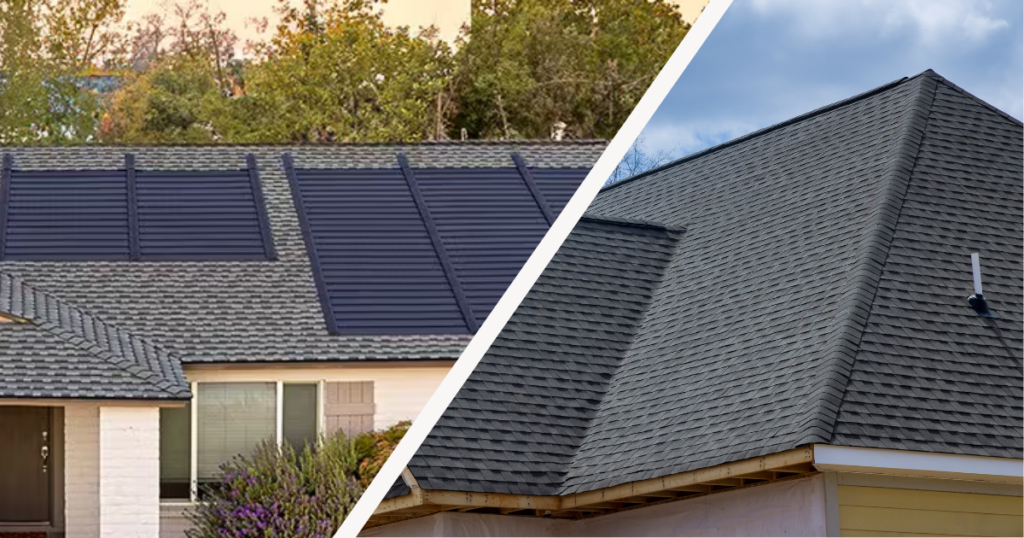
Solar roofing integrates solar technology directly into your roofing system.
Instead of mounting panels on top of shingles, systems like GAF Energy’s Timberline Solar use solar shingles that function as both roofing material and energy generator.
In simple terms:
- A traditional roof protects your home.
- Solar panels generate electricity.
- Solar roofing does both at the same time.
Let’s break down how traditional roofing and solar roofing compare in cost, function, aesthetics, installation, maintenance, efficiency, and durability so that you can make the best decision for your home.
Cost Comparison
Traditional Roofing Costs
A typical base roof replacement cost range, depending on size, pitch, ventilation needs, and material quality:
- Asphalt roofing: anywhere from $10,000 to $20,000+
- Metal roofing: typically $15,000 to $30,000+ for a full replacement
- Slate or tile roofing: often $25,000 to $50,000+, depending on quality and size
Traditional Solar Panels Costs
Traditional solar panel installations vary depending on system size, roof type, and energy needs, but most residential systems range from 5 kW to 10 kW.
- A 5 kW system typically ranges from $15,000 to $18,000 before incentives.
- A 7.5 kW system often costs $20,000 to $24,000 before incentives.
- A 10 kW system can cost $25,000 to $30,000+ before incentives.
While the direct 30% federal tax credit for homeowner-owned systems (Section 25D) expired at the end of 2025, homeowners in Pennsylvania can still capture significant value through:
- Solar Leases or Power Purchase Agreements (PPAs): Under these models, the provider can claim a 30% (or higher) federal credit and pass the savings to you through lower monthly rates or reduced upfront costs—often saving you $4,500 to $9,000+ over the life of the system.
- Solar Renewable Energy Credits (SRECs): These currently trade around $35–$45 per MWh, potentially adding $200–$500 in annual passive income.
Traditional panels are generally more affordable than solar roofing because they do not include a full roof replacement.
Solar Roofing System Costs
Solar roofing combines roof replacement and solar installation into one project.
Because it serves two functions, it comes with a higher upfront investment than either traditional roofing or traditional solar panels alone.
Current typical price estimates for solar roofing systems like Timberline Solar™ range approximately:
- Smaller homes needing modest energy production: $30,000 to $40,000
- Mid-size homes with higher output needs: $40,000 to $60,000+
- Larger homes or systems designed to offset most or all energy use: $60,000 to $80,000+
Again, many solar roofing systems qualify for specific federal and state credits (see section above).
Function & Efficiency
Traditional Roofing Function
Traditional roofing’s primary job is protection. It shields your home from:
- Rain and moisture intrusion
- Wind uplift
- UV exposure
- Snow and ice
- Temperature fluctuations
A properly installed roof from GP Martini Roofing also improves attic ventilation, insulation performance, and moisture control—all of which impact energy efficiency.
A well-designed traditional roofing system can reduce cooling costs by improving attic airflow and reflecting heat, often reducing summer energy bills by 5%–10% compared with older roofs.
Traditional Solar Panels Function & Estimated Savings
Traditional solar panels convert sunlight into usable electricity for your home. Panels are typically more efficient than solar shingles because they have optimized orientation and airflow.
Here’s what that means in practical terms:
- A 5 kW system might generate 6,000–8,000 kWh per year, depending on sunlight exposure and orientation.
- A 7.5 kW system might generate 9,000–12,000 kWh per year.
- A 10 kW system could generate 12,000–15,000 kWh per year.
For context, the average U.S. home uses around 10,000–12,000 kWh of electricity annually.
Estimated Savings:
If your home uses 10,000 kWh per year and solar offsets most of that energy, you could potentially save $1,000 to $2,000+ per year on electric bills, depending on your utility rates and net metering policies. Over 25 years, total savings could exceed $25,000–$40,000+ — even after factoring in system costs.
Panels also allow you to size your system to your energy goals, providing flexibility and predictable performance.
Solar Roofing Function & Estimated Savings
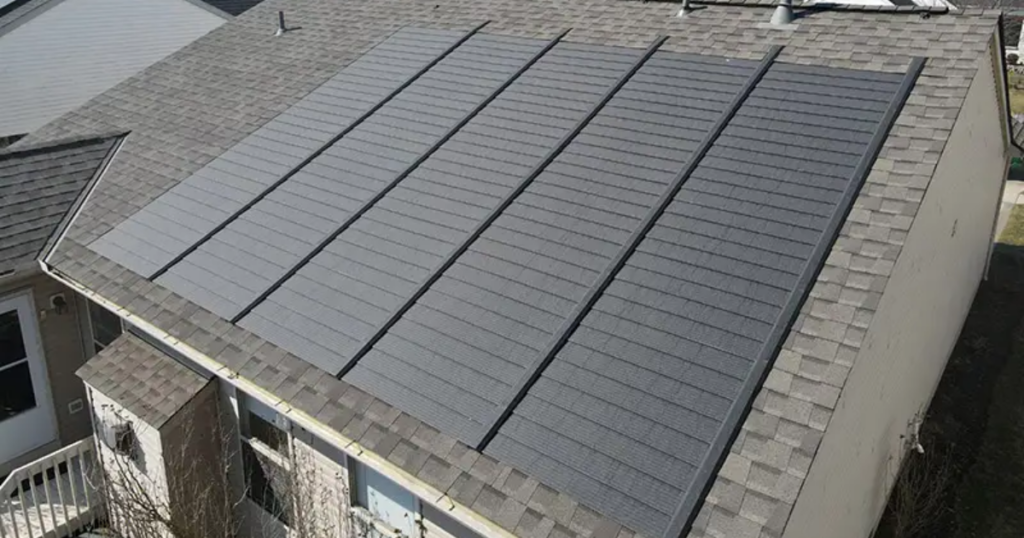
Solar roofing shingles like Timberline Solar serve as both roofing material and solar energy generators.
Because they are integrated directly into the roof, solar roofing shingles can:
- Generate continuous electricity
- Provide seamless weather protection
- Eliminate the visual bulk of traditional panels
Solar roofing systems tend to be slightly less efficient per square foot than traditional panels, but they compensate by covering larger portions of your roof.
A typical solar roofing installation might generate anywhere from 7,000 to 12,000+ kWh per year, depending on roof size and orientation.
Estimated Savings:
For a home that uses ~10,000 kWh per year, a solar roofing system that produces 10,000 kWh could offset most of your energy use—potentially saving $1,000 to $2,000+ annually on your electric bill.
Because solar roofing also serves as your roof, you won’t pay for both a roof and a solar system separately, potentially saving money over time compared with replacing the roof and adding solar panels separately.
Key Considerations Before Choosing Solar Roofing
As you’re weighing solar roofing, here are the top factors to think through:
Budget
- Match your investment with long-term goals
- Include federal tax credits and local rebates
- Consider how long you plan to stay in your home
Energy Needs
- Estimate your annual electricity usage
- Think about how much of your usage you want solar to offset
- Decide if battery storage for outages is a priority
Aesthetics
- Do you want a seamless roof look?
- Are solar panels compatible with your home’s architecture?
- Does your neighborhood have design guidelines?
Roof Condition
- Is your current roof near the end of its life?
- Would adding panels now require removal sooner rather than later for underlying roof repairs or replacement?
Get Your Free Traditional or Solar Estimate
Traditional roofing remains the most predictable and cost-effective way to protect your home.
Solar roofing merges roofing and solar into a sleek, integrated energy system.
The right choice depends on your budget, design goals, and energy needs.
Contact GP Martini Roofing for a Free Estimate for your home.
FAQs
Is solar roofing more expensive than traditional solar panels?
Yes, solar roofing typically costs more upfront than traditional solar panels because it combines a full roof replacement with energy generation.
However, when you factor in federal tax credits and long-term energy savings, solar roofing can be comparable to installing a new roof and panels separately.
How much can I save with traditional solar panels on my home?
Most homeowners save between $1,000 and $2,000 per year on electricity with a properly sized solar panel system. Over 20–25 years, total savings can reach $25,000-$40,000 or more, depending on local utility rates and how much energy your system offsets.
Do solar shingles work as well as traditional solar panels?
Solar shingles are slightly less efficient per square foot than traditional solar panels, but they cover more roof area and provide a seamless look.
Many homeowners generate enough electricity to offset most household energy use while also serving as a durable roofing system.
How do I know if my roof is a good candidate for solar?
Your roof should have good sun exposure, minimal shading from trees, and adequate structural condition. South- and west-facing roof sections perform best. If your roof is nearing the end of its lifespan, replacing it before installing solar is often the smartest long-term investment.
How long do solar roofing systems and solar panels last?
Most traditional solar panels and solar roofing systems are designed to last 25–30 years or longer. They typically include performance warranties guaranteeing energy production over time.
The lifespan of the roofing material itself depends on installation quality and local weather conditions.
 Overcoming HOA Challenges to Deliver Cost-Saving GAF Solar Roofing
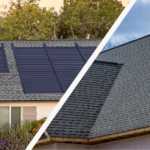 Solar Roofing vs. Traditional Roofing: What Homeowners Should Know
 Siding Warping: Why Your Home’s Shield is Failing and How to Fix It
 Metal Roofing Cost Breakdown: Materials, Labor, and Lifespan
 Siding Problems: How to Spot (and Stop) Damage Before It Starts