Solar Shingle Installation Timeline and What Your Return on Investment Looks Like
![Blog Images [MR] (2)](https://eadn-wc03-9721172.nxedge.io/wp-content/uploads/Blog-Images-MR-2-1-1024x538.png "Blog Images [MR] (2)")
What You’ll Learn
How much could I save with solar shingles?
You could save tens of thousands of dollars over 25 years by lowering or eliminating your reliance on rising electricity rates, depending on your home’s energy usage and system size.
In This Blog:
Your roof is doing a great job.
It protects you from the elements and maintains the structural integrity of your home.
But it can be doing even more…like generating electricity.
Integrating a solar shingle system increases your home’s efficiency, minimizes your reliance on the grid, and lowers your electricity bills.
Here is the estimated solar shingle installation timeline for your home.
What Are Solar Shingles
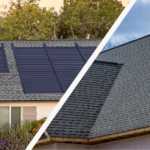
Solar shingles, also known as solar roof tiles or photovoltaic (PV) shingles, are designed to look like conventional roof shingles, unlike traditional solar panels.
The shingles are integrated directly into the roof structure, serving the dual purpose of providing protection from the elements and generating electricity.
They also come in various shapes, sizes, and colors, making them customizable to match the aesthetic of your home or building.
Solar shingles offer several advantages over traditional solar panels:
- Aesthetic appeal: Solar shingles seamlessly blend with the roofing material, maintaining the architectural integrity of your property. They are an excellent choice for homeowners who want to go solar without altering the look of their homes.
- Durability: Solar shingles are designed to withstand harsh weather conditions, including heavy rain, wind, and hail. They provide both solar power generation and roofing protection in one.
- Space efficiency: Solar shingles utilize all available roof space, maximizing energy generation without the need for additional land or roof space.
Solar Shingles Install Timeline
Assessment – 30 to 60 Minutes
Before diving into the installation, a qualified solar installer will evaluate your property’s suitability for solar shingles.
Factors such as roof orientation, shading, and the structural integrity of your roof will be considered.
This assessment should only take around a half hour to an hour to complete.
Designing – 48 Hours
This part of the process has a quick 48-hour turnaround time.
After the site assessment, GAF will design a customized solar shingle system tailored to your home’s specific requirements.
The design considers details from the assessment, including the number of shingles needed, their arrangement, the electrical configuration, and whether or not you will have battery storage installed.
Permitting – 2 to 8 Weeks
Installing solar shingles requires permits and approvals from local authorities and utility companies.
Your installer should be able to handle all the paperwork and ensure compliance with regulations and building codes.
The process of securing these permits can take up to 8 weeks. It will take 1 to 2 weeks for the local permits and 6 to 8 weeks for the utility permits.
Installing – 1 to 2 Days
Installation begins with removing existing roofing materials at the designated installation area, and your new solar shingles are then integrated into the roofing structure.
Depending on the size of your roof and the configuration of your shingles, installation can take 1 to 2 days.
This process involves securing the shingles to the roof deck and connecting them to the electrical system.
Installers will pay close attention to solar shingles’ alignment, spacing, and weatherproofing to ensure their performance and longevity. Properly sealed connections and flashing are critical to prevent leaks and maintain the integrity of your roof.
Connecting
Once the solar shingles are securely installed on your roof, they are connected to an inverter, which converts the DC electricity generated by the shingles into AC electricity suitable for home use.
The inverter is then connected to your home’s electrical panel.
Inspecting and Activating
Before activating the system, the installer will conduct thorough safety checks and inspections to ensure that all connections are secure and that the system meets local electrical codes and safety standards.
Return on Investment Timeline
Investing in solar shingles is good for the environment and financially rewarding.
Here’s the breakdown of your solar shingles’ costs, tax breaks, and eventual return on investment (ROI).
Payback Period
The payback period is the span of time it will take for your cumulative energy savings to equal your initial investment in solar shingles.
Factors like energy price fluctuations and how much energy you consume play a significant role in determining how quickly your payback period is, but for most homeowners, the average is between 6 and 10 years.
Upfront Costs
The first step in understanding your return on investment timeline is to consider the upfront costs associated with solar shingle installation.
These costs typically include:
- The purchase of solar shingles
- Installation labor
- Permits
- Any other necessary electrical work or upgrades.
Your installer will provide you with a detailed estimate.
Government Incentives and Tax Credits
One of the most significant factors influencing your ROI timeline is the availability of government incentives and tax credits.
These incentives are often provided at the federal, state, or local levels and can significantly reduce the overall cost of your solar shingle system.
In Chester County and the surrounding areas, incentives and tax credits can amount to around $6,000.
Energy Savings
As your solar shingle system generates electricity, you’ll see a reduction in your monthly energy bills.
The extent of these savings will vary depending on your system’s size and energy usage, but over time, they can be substantial.
Long-Term Savings
Beyond the payback period, your solar shingles continue to generate electricity and reduce your energy bills.
This leads to long-term financial benefits, as you effectively lock in lower energy costs for the lifespan of your solar shingle system, which can be 20-25 years or more.
The Cost of No Solar: $86,738
A Chester County homeowner with a 1500 sq ft. home will pay roughly $86,738 in electricity bills over 25 years.
This price doesn’t account for the unpredictability of electricity price hikes that could make your bill soar throughout the years.
With a solar shingle system, this homeowner will save an estimated $35,563 on their electric bill.
Save with Energy Efficient Solar Shingles
Our team of professional roofers will guide you through the process of integrating solar panel installation with your roof replacement, starting with a detailed, reliable estimate for your solar shingle project. Contact us today for a free estimate on your roofing project.
FAQs
How do I calculate the cost of not going solar?
You can estimate the cost of not going solar by multiplying your average annual electricity bill by 25 years and factoring in projected utility rate increases. Because electricity rates historically rise over time, your actual long-term cost may be much higher than your current bill suggests.
Will solar shingles eliminate my electric bill completely?
You may significantly reduce or even eliminate most of your electric bill, depending on the size of your solar shingle system and your home’s energy usage. If your system doesn’t offset 100% of your consumption, you’ll still see substantial monthly savings.
How long does it take for solar shingles to pay for themselves?
You could see a return on your investment in several years, depending on installation cost, available tax incentives, and how much you save on electricity. After your system reaches its break-even point, the energy it produces continues to generate long-term savings.
Is solar roofing better than traditional solar panels?
You can achieve energy savings with both options, but solar shingles offer a more streamlined appearance because they integrate directly into your roof. If curb appeal is important to you, solar shingles may provide a more seamless solution.
Do solar shingles increase my home’s value?
You may increase your home’s resale value because buyers are often attracted to lower energy costs and modern energy-efficient upgrades. A home with built-in solar power can stand out in competitive real estate markets.
 Overcoming HOA Challenges to Deliver Cost-Saving GAF Solar Roofing
- Solar Roofing vs. Traditional Roofing: What Homeowners Should Know
- Siding Warping: Why Your Home’s Shield is Failing and How to Fix It
- Metal Roofing Cost Breakdown: Materials, Labor, and Lifespan
- Siding Problems: How to Spot (and Stop) Damage Before It Starts