Lightning Strikes and Roofs: Is Your Home Protected?
What You’ll Learn
How can lightning damage your roof, and what should you look for after a storm?
Direct lightning strikes on homes are rare, but they’re real. And when they do happen, the consequences can be expensive and dangerous:
- Cracked or burned shingles
- Damaged gutters and flashing
- Hidden structural or electrical risks
- Even the potential for roof fires
Homeowners in Ardmore, Bryn Mawr, and across Chester County know that summer storms can come out of nowhere. Understanding the risks and knowing how to protect your home can save you thousands in repairs and give you peace of mind during storm season.
In This Blog:
You hear a sharp crack of thunder, then smell smoke.
Lightning has struck your roof, leaving behind a small scorch mark that you can’t see from the ground, but it’s already started a slow, smoldering burn in the attic.
It’s a rare scenario, but it’s exactly the kind of risk that makes understanding lightning damage so important.
If you live anywhere from King of Prussia to Phoenixville, knowing what to look for after a storm could make all the difference.
Lightning and Your Roof: A Risk Worth Noting
Lightning strikes aren’t usually the first concern when thinking about roof damage, especially during a major storm when leaks or falling tree branches are top of mind.
But lightning is unpredictable, and when it does strike, it can strike anywhere.
Your roof, as the highest point of your home, is particularly vulnerable. While the chances of a direct hit are low, the consequences can be serious.
Homes located on hills, near open fields, or at higher elevations are at greater risk.
And even if lightning doesn’t hit your roof directly, nearby strikes can still cause electrical surges or minor structural damage.
Think of lightning like a lottery you definitely don’t want to win—rare, but unforgettable for all the wrong reasons.
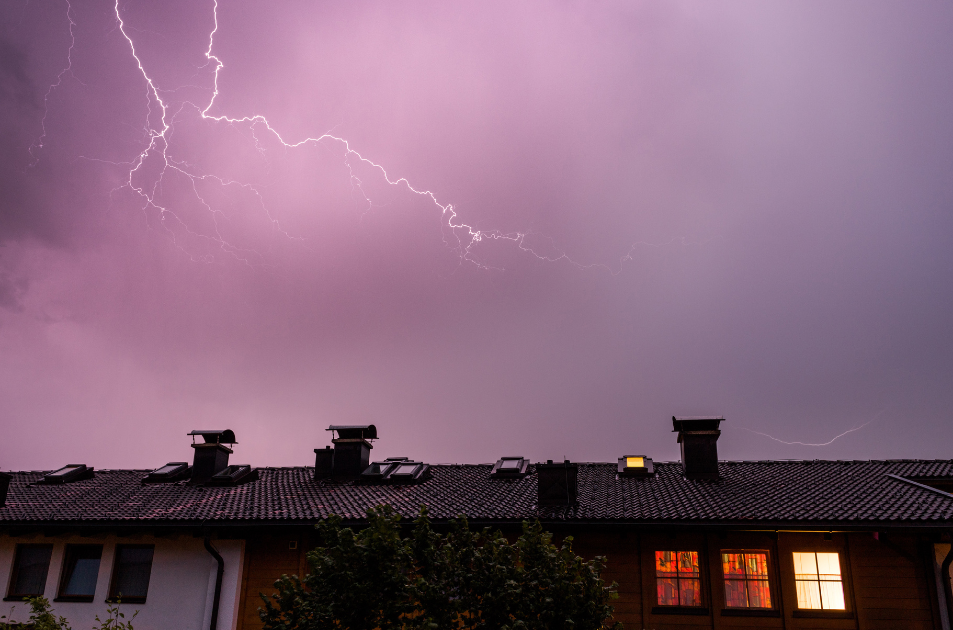
The Damage Lightning Can Cause (and How to Spot It)
When lightning does hit a home, it doesn’t always leave dramatic cartoon-style scorch marks, but the damage can be serious.
Common signs of lightning-related roof damage:
- Cracked or missing shingles caused by the shockwave
- Burn or scorch marks on the roof or attic framing
- Damaged gutters or flashing, sometimes melted at the edges
- Leaks or water stains if lightning punctures the roof deck
- Electrical hazards from superheated materials or fire risk
If you live in Devon, Downingtown, or anywhere in Southeastern PA, you know how fast summer storms roll in.
Scheduling a professional roof inspection after a major storm is always a smart move, even if everything looks fine from the ground.
How Lightning Protection Systems Work
If you’ve ever seen lightning rods on barns or tall buildings, you’ve seen a lightning protection system in action.
But modern systems are more discreet and protect your home, too.
Here’s how they work:
- Lightning rods & conductors: Intercept the strike and provide a safe path
- Grounding cables: Direct the energy safely into the ground
- Surge protection: Helps protect your home’s electrical system
Contrary to popular belief, these systems don’t attract lightning.
They simply control and redirect it, preventing destructive energy from traveling through your home’s structure.
Roofing Materials and Lightning Resistance
Some roofs are naturally better equipped to handle lightning strikes than others.
Metal Roofs
- Non-combustible and excellent at dispersing energy
- Often considered one of the safest roofing materials in storm-prone areas like Chester County.
Asphalt Shingles
- May crack or burn if the underlying wood ignites
- Affordable but less resilient to extreme heat
Tile or Slate Roofs
- Fire-resistant but brittle; a direct strike can crack tiles
Wood Shakes
- Highest fire risk and generally not recommended in regions with frequent storms, like Southeastern PA.
What About Solar Roofs?
Solar panels and solar shingles are becoming more common for homeowners, from Chester County to King of Prussia. But there is often a question about whether or not these roof additions increase lightning risk.
Here’s the answer:
- Solar panels themselves are not highly conductive, but their metal framing can make grounding important
- Professional installation with proper grounding is key
- Many solar setups now integrate with lightning protection systems for extra safety
If you’re considering solar, ask your installer about integrated lightning protection—it’s a small step for major peace of mind.
Let’s Talk About Your Roof
If you want to make sure your Chester County roof is storm-ready, contact GP Martini Roofing for a free inspection and estimate.
We’ll assess your roof, explain your options, and help you protect your home from the next big storm.
FAQs
Does a metal roof attract lightning?
No, metal roofs do not attract lightning. Lightning tends to strike the tallest object in an area, regardless of the material.
However, metal roofs are actually safer than many alternatives because they’re non-combustible and highly fire-resistant. They also help disperse electrical energy more effectively, reducing the chance of fire or structural damage.
Should every home have a lightning rod?
Not necessarily. Lightning protection systems, which include lightning rods, are most beneficial for homes in high-risk locations, such as those on hills, near open landscapes, or in storm-prone regions.
If your home is tall, isolated, or located in an area with frequent lightning activity, a lightning rod can add an extra layer of protection. For most suburban homes, it’s a case-by-case decision based on location and structure.
How can I tell if lightning damaged my roof?
Signs of lightning damage can range from obvious to subtle. Look for:
– Burn marks or scorching on shingles or attic beams
– Cracked, loose, or missing shingles
– New roof leaks or signs of water intrusion
– Unusual electrical issues or power surges inside the home
Keep in mind that lightning damage may not always be visible from the ground. If you suspect a strike or notice any of the above, it’s best to schedule a professional roof inspection to catch hidden issues early and avoid bigger problems down the line.