How to Choose Gutters That Enhance and Protect Your Home
What You’ll Learn
How do I choose gutters that are right for my home?
Choosing the right gutters comes down to a few key factors: your roof size and pitch, the material that fits your budget and climate, and the style and color that match your home. The right combination helps prevent water damage, reduces maintenance, and improves your home’s overall appearance.
In This Blog:
There’s a shallow puddle underneath your gutters.
When the rain pours down, your gutters should be channeling it away.
If you’re starting to notice overflow or damage around your gutters, it might be time for an upgrade.
Let’s get into what you need to know about choosing new gutters for your home.
Gutters Protect Your Home by Channeling Water Away
Here’s how well-maintained gutters safeguard your home:
- Preventing Basement Flooding: Excess water from clogged or improperly installed gutters can drip into your basement via exterior walls, leading to flooding, mold growth, etc.
- Avoiding Erosion: Gutters direct the flow of rainwater away from your property through downspouts. Without effective gutters, water can wash away soil around your home.
- Protecting Against Foundation Cracks: Consistent water buildup around the foundation leads to hydrostatic pressure, which pushes against the foundation’s walls and causes cracking, shifting, and settling.
Choosing the Right Size Gutters for Your Home
The sizing of gutters is determined by two key factors: the area of your roof and its pitch.
You can calculate the gutter size you’ll need by multiplying your roof area by your roof-pitch factor and rainfall intensity in your area using this guide.
Roof Area
Your roof’s total square footage dictates the water volume that needs to be channeled away during rainstorms.
Obviously, larger roof areas collect more water, requiring larger or more gutters.
Roof Pitch
The steeper the roof, the faster rainwater flows off it.
In such cases, wider gutters are recommended to prevent spillage.
Standard Gutter Sizes
Most residential homes are equipped with 5-inch gutters.
However, for homes in areas with heavy downpours, 6-inch gutters offer a better solution and can carry significantly more water.
Note that gutters can be cut to specific lengths to fit odd-shaped areas or custom angles.
Choosing the Best Gutter Materials Based on Cost and Lifespan
No matter the material you choose, all gutters require basic maintenance to function properly.
This includes cleaning out leaves and debris at least twice a year, ensuring clear downspouts, and checking for any signs of sagging or detachment from the house.
Aluminum Gutters – 20-Year Lifespan
Aluminum gutters typically range from $8 to $20 per linear foot, including labor costs.
Aluminum gutters are celebrated for their combination of lightness and strength.
They resist rust, which makes them a great option for any climate.
Their durability ensures they perform well over time without the heaviness of options like steel.
Aluminum gutters are available in a wide range of colors and can be painted.
Some aluminum gutters also consist of up to 90% recycled content for those looking to be sustainable.
Vinyl Gutters – 10-15 Year Lifespan
Vinyl gutters cost between $6 to $15 per linear foot to install.
Vinyl gutters are a popular choice for DIY enthusiasts due to their ease of installation.
They are lightweight and come in various colors that are integral to the material, so you don’t have to worry about paint peeling.
However, vinyl gutters may not be suitable for very cold climates as they can crack in freezing temperatures.
Steel Gutters – 15-20 Year Lifespan
Steel gutters cost between $11 to $28 per linear foot, with labor costs.
In areas prone to severe weather, steel gutters offer enhanced durability and strength.
They withstand heavy snow, strong winds, and even falling debris better than lighter materials.
While steel is more robust, it requires a protective coating to prevent rust.
Galvanized steel is a common option, offering rust resistance at a higher price point.
Copper Gutters – 50+ Year Lifespan
Copper gutters range from $15 to $40 per linear foot installed.
If you’re looking for superior longevity and a distinctive look, copper gutters are an excellent choice.
Copper is extremely durable and won’t rust.
Over time, it develops a greenish patina that adds an elegant and classic look.
While copper gutters are the most expensive, their longevity and unique aesthetic appeal make them a worthwhile investment.
Additional Factors Influencing Cost
Custom sizes or styles increase the cost, especially if special fabrications are needed.
Homes with multiple stories, intricate rooflines, or obstacles like trees and landscaping complicate installation, increasing labor costs.
Additional components, such as downspouts, gutter guards, or heat tape to prevent ice dams, add to the cost.
Choosing the Right Gutter Color to Make Your Home’s Design Pop
For a seamless integration with your home’s design, match the gutters to your roof color.
Alternatively, matching the gutter color to the home’s trim, such as fascias, soffits, or even window frames, highlights these architectural features.
The most common gutter colors tend to be neutrals such as white, brown, and gray:
- White is a universal choice that matches most exteriors and gives a clean, classic look.
- Brown and shades of beige are ideal for homes with a more natural palette, such as those with wooden, brick, or stone elements.
- Gray offers a modern and subtle option that works well with contemporary home styles, especially those with blue, white, or darker facades.
- Custom gutter colors can also be perfectly matched to any aspect of your home’s exterior.
Choosing the right gutter color affects your home’s perceived dimensions and style.
Obtain samples where possible and view them in different lights throughout the day to see how they blend with your home’s exterior.
Choosing a Gutter Style to Match Your Home
K-style Gutters
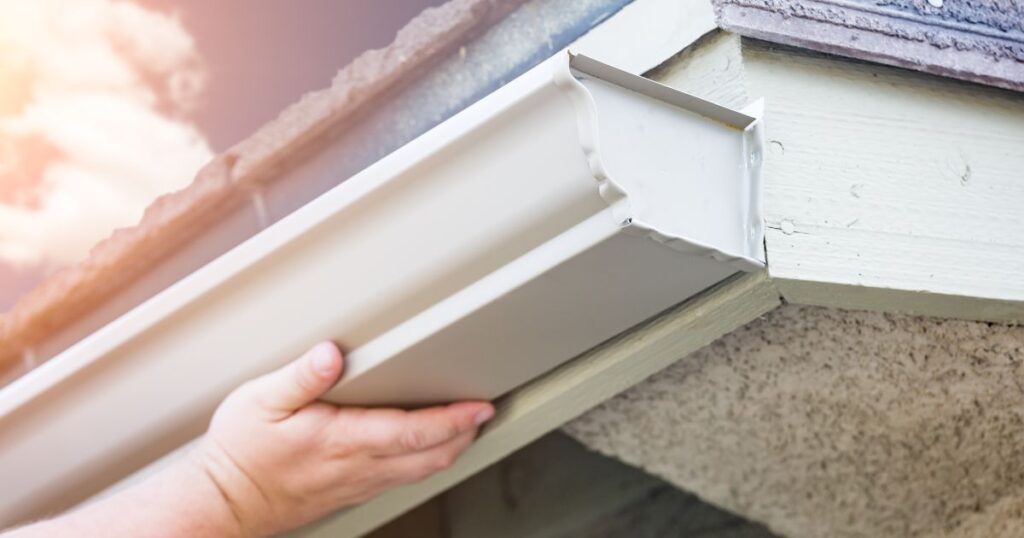
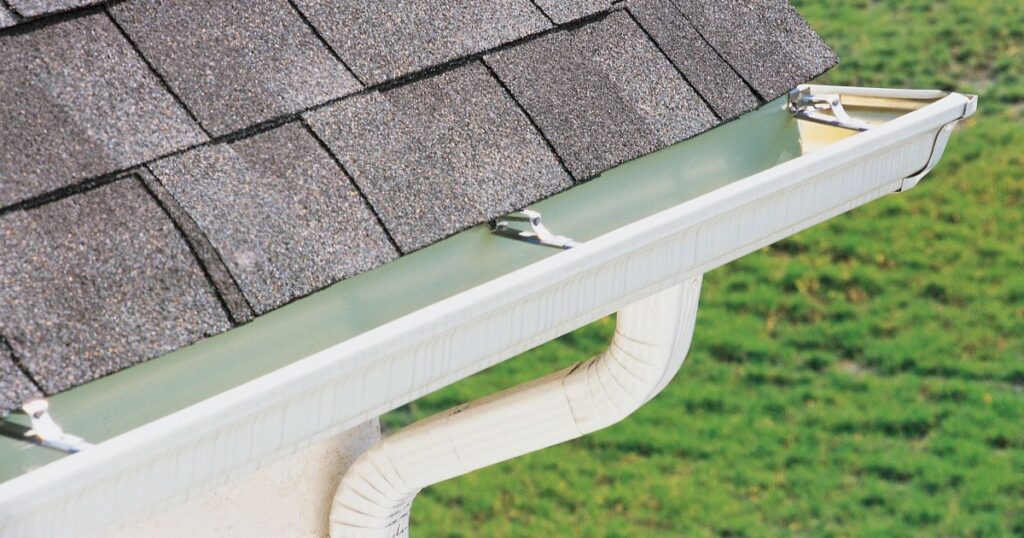
This is the most common gutter style. They are favored for their decorative appearance, mimicking crown molding in interior finishes.
K-style gutters, with their flat backs and bottoms, provide excellent water handling capabilities and contribute a sleek, clean line to the edge of the roof.
Half-round Gutters
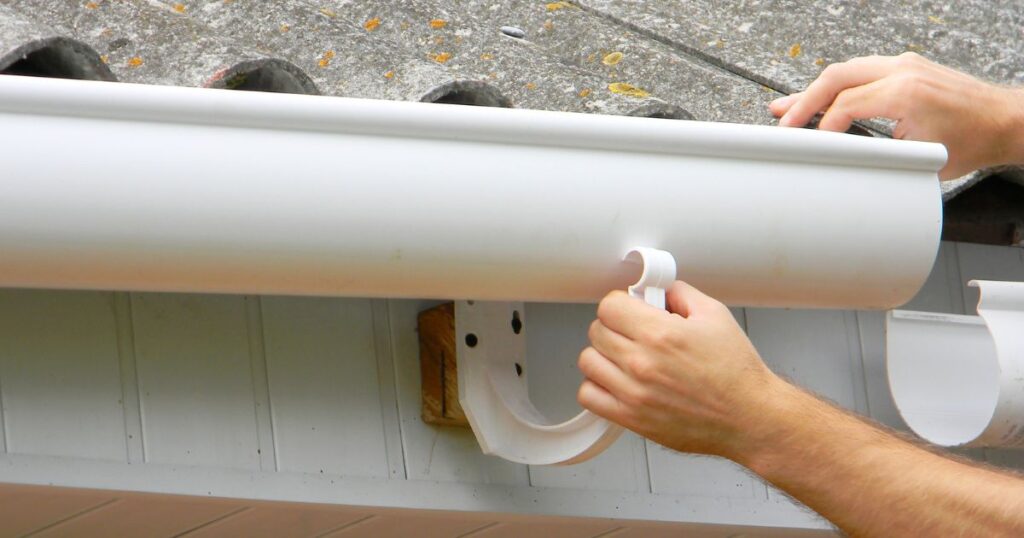
With a rounded shape reminiscent of traditional piping, half-round gutters are ideal for older homes where maintaining authentic stylistic details is essential.
These gutters complement homes with rounded roof lines, copper roofing elements, or ornate detailing.
Their smooth shape facilitates easier cleaning and less debris, making them a practical choice for areas with heavy rainfall.
Box Gutters
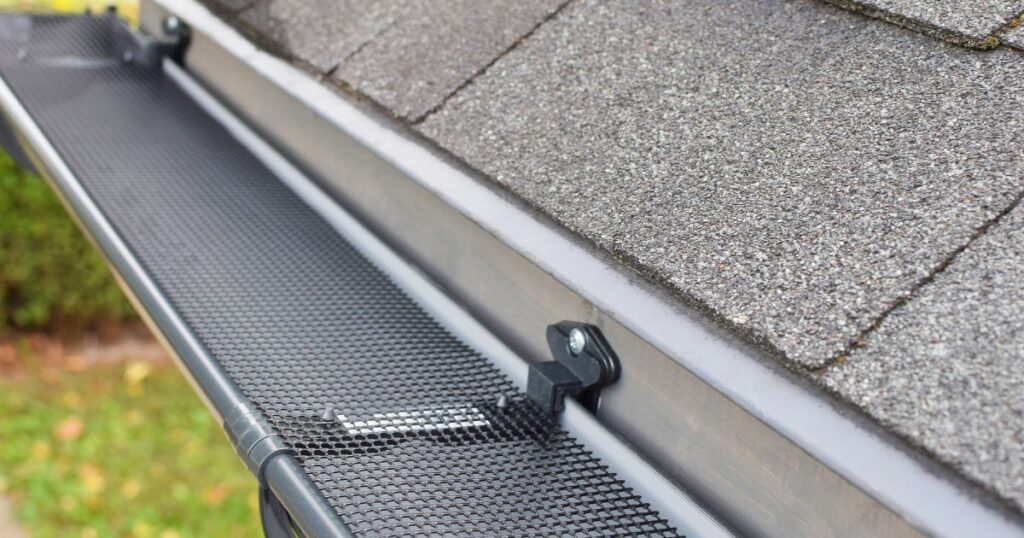
Less common but highly effective, box gutters are often used in commercial properties.
They can be adapted for residential use, particularly in ultra-modern or industrial-style homes.
Their large size and robust design can handle lots of water, making them ideal for large roofs.
The sharp, straightforward lines of box gutters enhance the geometric elements of contemporary homes.
The Role of Gutter Guards in Preventing Clogs and Overflows
Gutter guards prevent clogs and overflows.
By installing the right type of gutter guard, you reduce the amount of maintenance required.
Mesh Guards
These guards are made of a fine metal or plastic mesh that lies over the top of your gutters.
They are particularly effective at keeping out smaller debris, such as pine needles, seeds, and small leaves.
The mesh allows water to flow freely into the gutters, preventing debris from settling inside.
Foam Guards
Foam inserts fit directly into your gutter, filling the space so that only water seeps through.
This type of guard is very effective at blocking larger debris, like leaves and twigs, from entering the gutter.
The foam’s porous nature allows water to pass through while debris sits on top, eventually blowing away or being easily removed.
However, they require occasional cleaning to remove debris that collects on the surface.
Brush Guards
These guards consist of bristle-like fibers that stand upright inside the gutter.
Like foam guards, they block large debris while allowing water to pass through.
However, the bristles collect smaller particles over time, so they must be cleaned periodically.
GP Martini Roofing Has the New Gutters for Your Home
Every type of gutter offers distinct advantages and potential drawbacks.
Guide your choice by considering climate, budget, aesthetic preference, and the specific needs of your home.
At GP Martini Roofing, we provide comprehensive roofing and gutter services so that your home’s gutter system is effective and complements the style of your home.
Our team of experts is committed to providing high-quality installation and maintenance services, as well as a wide range of gutter materials, colors, and styles.
Contact GP Martini Roofing today for a consultation and ensure your home remains protected in style!

FAQs
Are colored gutters more expensive?
Yes, colored gutters, like blue or purple instead of the standard white or gray, can be more expensive. This is because the coloring process for colors other than white, tan, gray, black, or brown often involves additional materials and labor. However, the increased cost can be worth it for the aesthetic appeal and potential impact on your home’s curb appeal.
How much rain can a 5-inch gutter handle?
A 5-inch gutter can typically handle approximately 5,520 gallons of water per hour, which is sufficient for most residential homes in areas with moderate rainfall. It’s important to ensure that your downspouts and drainage systems are adequate to handle this flow.
What is the lifespan of gutters?
The lifespan of gutters varies depending on the material. Aluminum and vinyl gutters usually last about 20 years, while steel can last up to 20 years if maintained properly. Copper gutters offer the longest lifespan, often exceeding 50 years, with proper care.
What is the longest-lasting gutter material?
Copper is the longest-lasting gutter material, often lasting over 50 years with minimal maintenance. It is highly durable and resistant to corrosion.
It also does not require painting or frequent repairs. Copper’s longevity makes it a premium choice for gutters despite its higher initial cost.